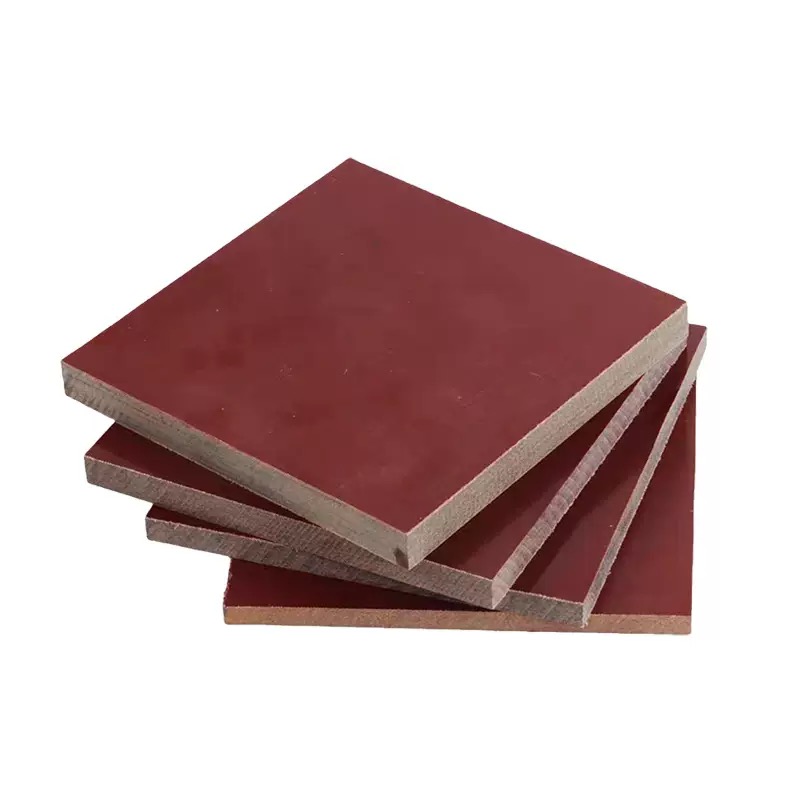
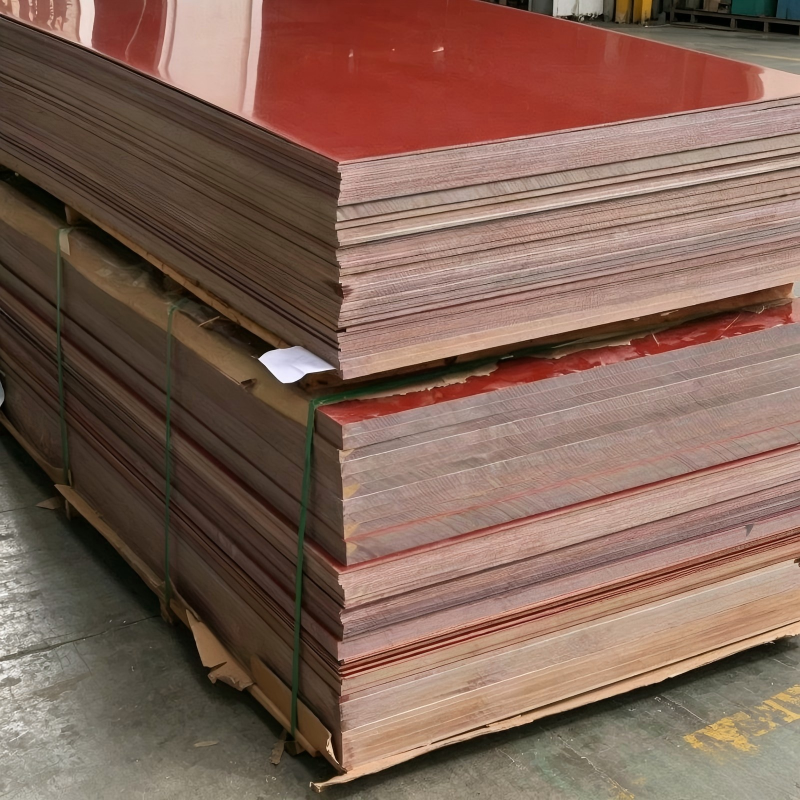
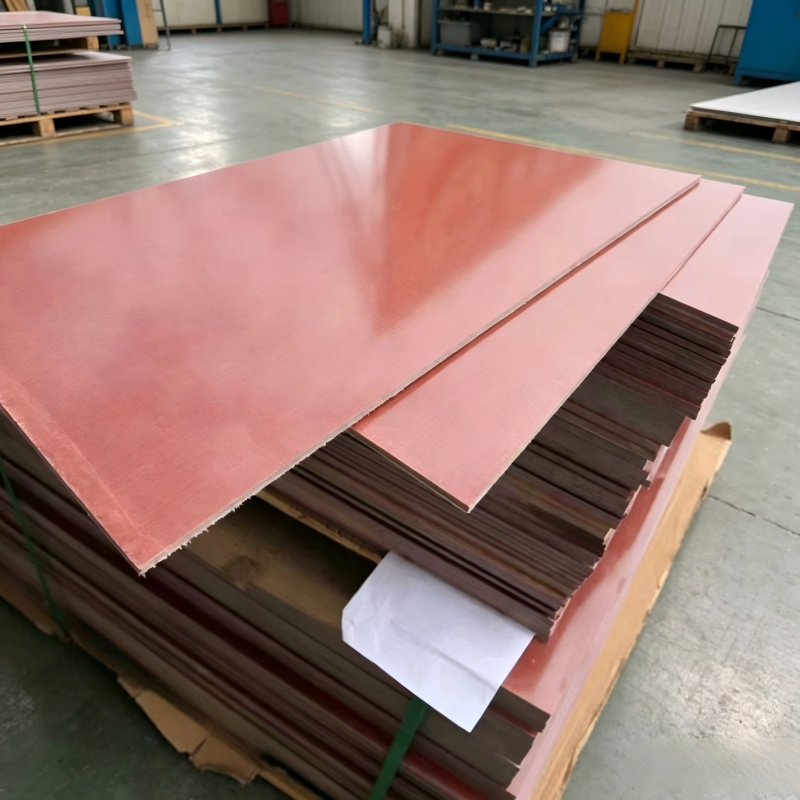
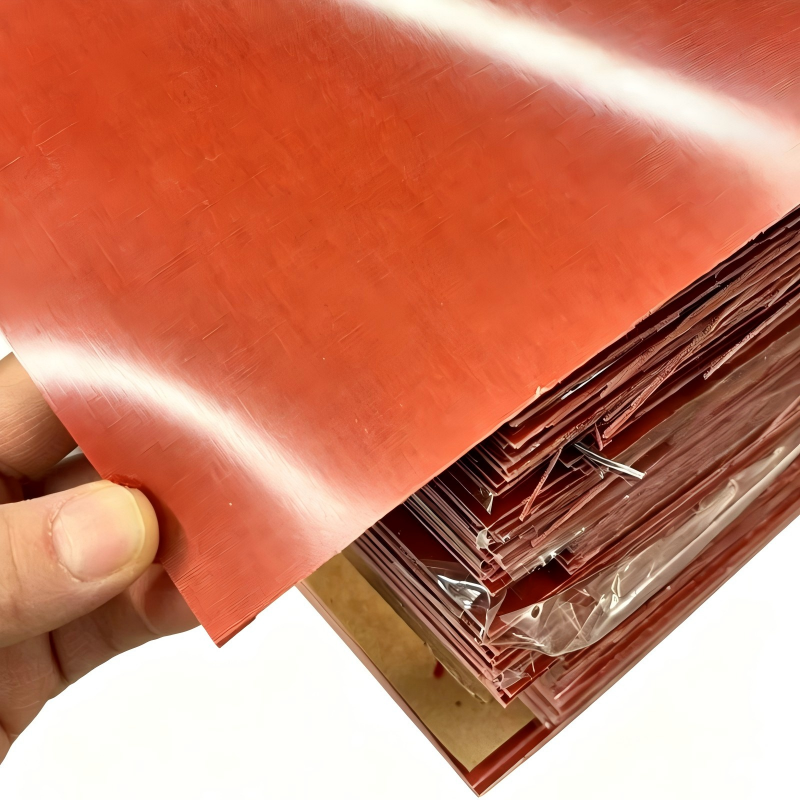
Key Properties:
Very good mechanical and thermal properties
Continuous operating temperature up to 120°C
Approved for oil and air
Low friction coefficient
High creep resistance
Vibration absorption
Higher load bearing vs. paper laminates
Good electro-insulation
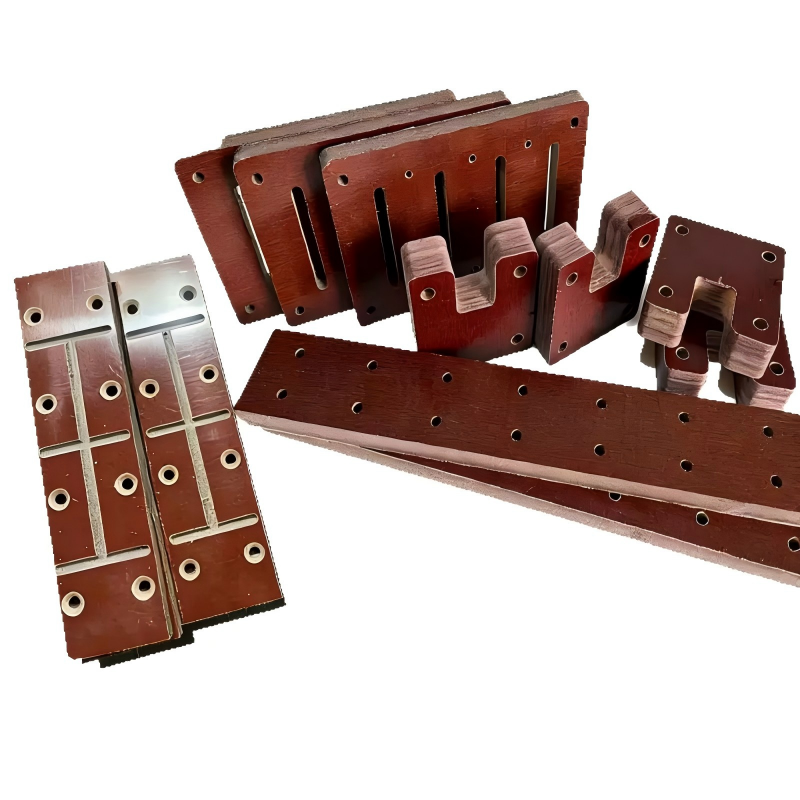
Available for CNC custom machining, cutting, turning and custom fabricated parts
Technical Data:
| Phenolic Cotton Cloth Laminated Sheet (Similar to NEMA C/CE/L/LE) |
| Properties |
Unit |
Value |
| Flexural strength perpendicular to laminations |
MPa |
≥100 |
| Bonding strength ( ≥10mm in thickness) |
N |
≥5400 |
| Impact strength parallel to laminations (Charpy) |
kJ/m² |
≥8.8 |
| Insulation resistance after immersion in water (D-24/23) |
Ω |
≥1×10⁶ |
Dielectric strength perpendicular to laminations
(in 90±2℃ transformer oil, 1 mm in thickness) |
MV/m |
≥0.82 |
Breakdown voltage parallel to laminations
(in 90±2℃ transformer oil) |
KV |
≥1 |
| Density |
g/cm³ |
1.40 |
| Water absorption (D-24/23, 1.6mm in thickness) |
mg |
≤220 |
| Color |
— |
Natural |
Applications:
Ball Race Cages
Gears (Medium Tooth)
Bushings, Spacers & Sleeves
Wear Resistant Components (Wear Plates, Guide Rails)
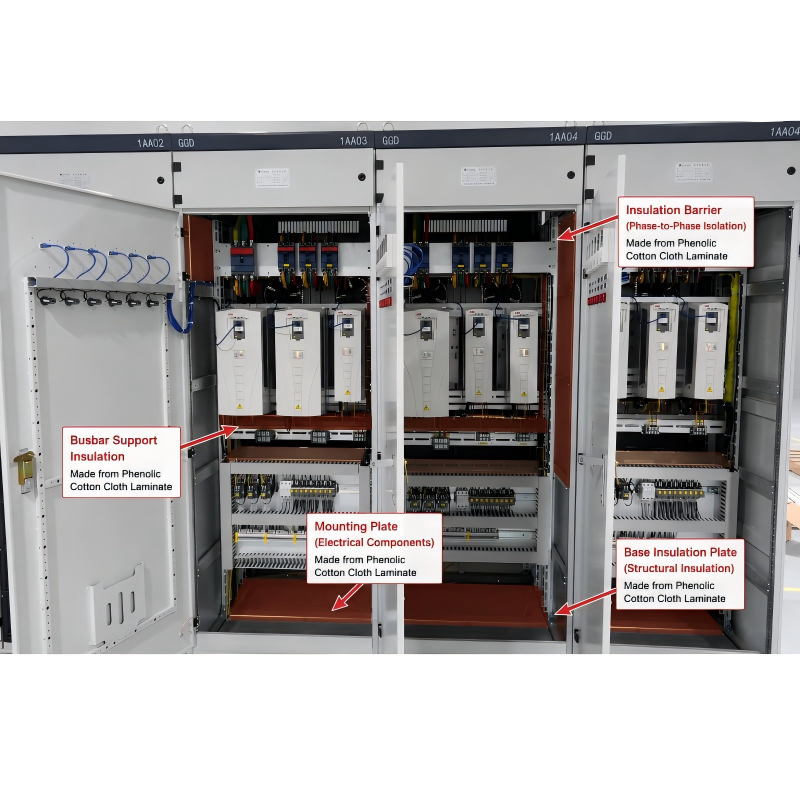
Low Voltage Electrical Insulation
Piston Rings & Sealing Components
Jigs, Fixtures & Punched Components
Compressor Rotor Blades
Bolts, Screws & Fasteners
Cryogenic & High Stability Parts
International Standards & Material Grades
Our phenolic cotton cloth laminates are manufactured in accordance with major international standards, allowing customers to select the most suitable grade for their mechanical or electrical applications.
| GOST Grade |
IEC Grade |
NEMA Grade |
DIN Grade |
Main Characteristics |
| 3025 |
PFCC201 |
C |
HGW2082 |
Designed primarily for mechanical applicationsrequiring strength and wear resistance. |
| 3027 |
PFCC202 |
CE |
HGW2082.5 |
Suitable for both mechanical and electrical insulationapplidations. |
| 3026 |
PFCC203 |
L |
HGW2083 |
Fine-weave cotton cloth construction providingimproved machining performance for mechanical parts. |
| 3028 |
PFCC204 |
LE |
HGW2083.5 |
Fine-weave cotton cloth construction offering excellentmechanical strength and electrical insulation properties. |
Phenolic Cotton Laminate vs Alternative Materials
Phenolic cotton cloth laminates deliver balanced performance and cost benefits against mainstream alternative engineering materials.
Compared with FR4/G10 epoxy glass cloth, phenolic cotton laminate is 20-40% more cost-effective. It offers qualified mechanical properties for general mechanical use, making it a more economical choice where premium electrical performance is not required.
Compared with phenolic paper laminates 3020/3021, cotton cloth type has a slightly higher raw material cost, but provides far better mechanical strength and wear resistance. It achieves longer service life and lower overall lifecycle cost under heavy mechanical and friction working conditions.
Compared with metal materials such as bronze and aluminum, phenolic cotton laminate can reduce volume cost by 40-70%. Its low density greatly reduces transportation and operation energy consumption, while excellent self-lubrication and corrosion resistance also save daily maintenance expenses.
FAQ
Q: What is phenolic cotton cloth laminated sheet used for?
A: It is commonly used for electrical insulation parts, gears, washers, supports, and structural components in industrial equipment.
Q: Can the material be machined?
A: Yes. It can be drilled, milled, cut, and fabricated into custom parts.
Q: What thicknesses are available?
A: Standard and custom thicknesses are available based on project requirements.
Q: Is custom cutting available?
A: Yes. CNC machining and custom fabrication services are available.